


Table of Contents
- Why Contractors Need Current Plumbing Code Books
- Quick Comparison: Code Books at a Glance
- 2024 International Plumbing Code Book: Modern Format and Accessibility
- 2024 Uniform Plumbing Code: Standards and Key Provisions
- Using an Illustrated Plumbing Code Reference for Field Lookups
- Plumbing Licensing Exam Study Guides and Prep Resources
- Choosing the Right Code Edition and Format for Your Jurisdiction
- Conclusion
- Frequently Asked Questions
Last Updated: October 14, 2026
Why Contractors Need Current Plumbing Code Books
Contractors, plumbers, and other plumbing professionals need reliable references to help them understand and apply the plumbing codes and standards that govern their work. Because code requirements can be revised over time and jurisdictions may adopt different editions, using the correct code book is an important part of preparing for projects, inspections, and licensing examinations.
A current plumbing code book can help contractors:
- Locate applicable requirements more efficiently
- Review installation and material requirements
- Prepare for inspections and code-related questions
- Reference requirements during project planning and field work
- Study for plumbing licensing or certification examinations
However, “current” does not always mean the newest edition available. A state, city, or other jurisdiction may have adopted an earlier edition of a plumbing code, sometimes with amendments or modifications. Contractors should therefore verify which code and edition applies to their specific project or jurisdiction.
For licensing examinations, candidates should also check the examination provider's current requirements to determine which code edition and reference materials are permitted.
Pro Tip: Before purchasing a plumbing code book, verify the code family, edition, and jurisdictional requirements that apply to your work or examination. Choosing the correct edition is more important than simply choosing the newest one.
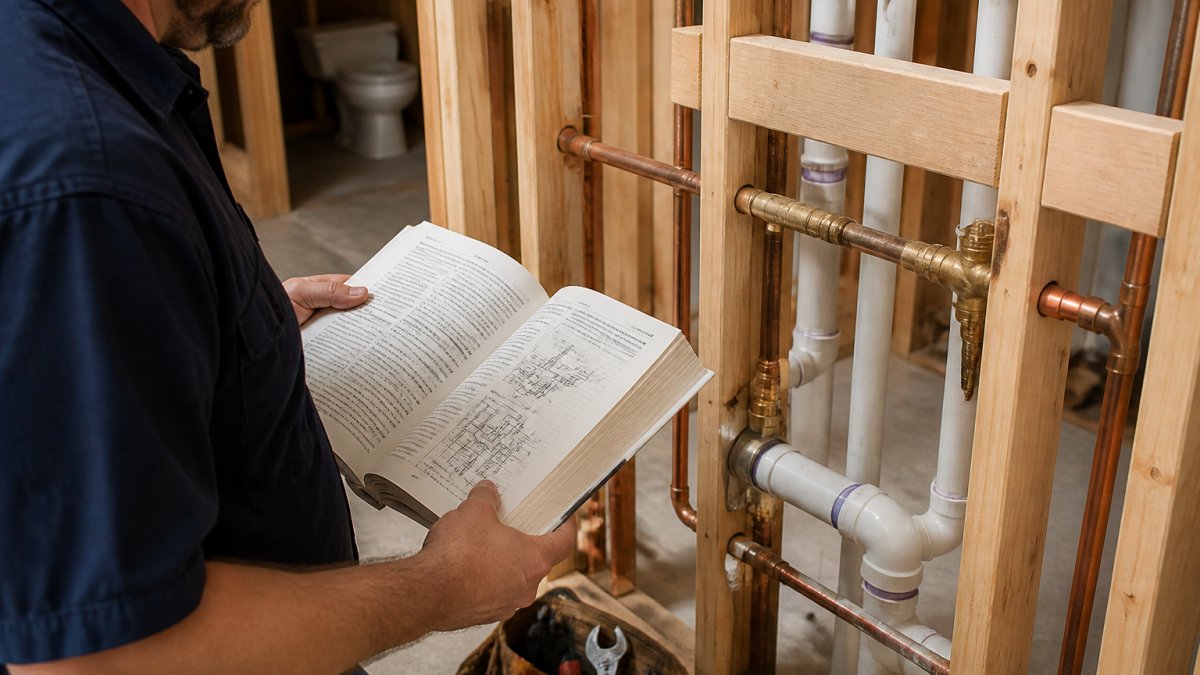
Staying current protects both the contractor's reputation and the end user's safety.
Lily's Trading Post stocks the latest International Plumbing Code and Uniform Plumbing Code editions, plus illustrated guides and exam prep resources for working professionals.

Quick Comparison: Code Books at a Glance
The right plumbing code book depends on the code family used in your jurisdiction, the edition that has been adopted, and how you plan to use the book. The two major plumbing code families commonly encountered in the United States are the International Plumbing Code (IPC) and the Uniform Plumbing Code (UPC).
Code Book or Resource |
Edition |
Best For |
Considerations |
|---|---|---|---|
International Plumbing Code (IPC) |
2024 |
Professionals working in jurisdictions that have adopted the IPC |
Verify that the 2024 edition is the one adopted or permitted in your jurisdiction |
Uniform Plumbing Code (UPC) |
2024 |
Professionals working in jurisdictions that have adopted the UPC |
Verify the adopted edition and any local amendments |
IPC Turbo Tabs |
2024 |
Quick reference and locating provisions efficiently |
Useful as a supplemental reference; confirm whether the format is permitted for your examination |
Uniform Plumbing Code (UPC) |
2021 |
Projects, coursework, or examinations that specifically require the 2021 edition |
Do not substitute a newer edition unless the applicable jurisdiction or examination permits it |
2024 International Plumbing Code Book: Modern Format and Accessibility
The 2024 International Plumbing Code establishes minimum regulations for plumbing systems while allowing new materials and technologies.


The 2024 International Plumbing Code (IPC) provides requirements for plumbing systems and is used as a reference in jurisdictions that have adopted the IPC, subject to local amendments and modifications.
The 2024 edition includes updated provisions and a revised presentation intended to help users navigate the code. When evaluating a code book for field or study use, features such as clear organization, tables, illustrations, indexes, and other reference aids can make it easier to locate applicable requirements.
The IPC also works alongside other ICC publications and referenced standards that address subjects such as accessibility, building requirements, and plumbing system design. The specific requirements that apply to a project depend on the adopted codes and standards in the applicable jurisdiction.
For contractors, the most important consideration is not simply the format of the book but whether the correct IPC edition has been adopted for the project or examination.
Pro Tip: If you use the IPC regularly, become familiar with its chapter organization, tables, definitions, and index. Knowing where to find information can make code lookups much more efficient than relying on memorization alone.
2024 Uniform Plumbing Code: Standards and Key Provisions
The 2024 Uniform Plumbing Code (UPC) is an American National Standard developed through IAPMO's ANSI-accredited consensus process. The code is developed with input from a broad range of participants in the plumbing and construction industries and is intended to provide requirements for the installation and inspection of plumbing systems. IAPMO.org
The 2024 edition introduced a number of changes from the 2021 edition, including provisions addressing tileable shower receptors and kits, temperature-actuated flow-reduction devices, all-gender facilities, water supply and distribution manifolds, and hot-water recirculating systems. It also updated requirements for appliance condensate drains and added several new appendices. IAPMO.org
New appendices in the 2024 UPC address subjects including non-sewered sanitation systems, qualifications for certain plumbing professionals, indoor horticultural facilities, tiny-house plumbing requirements, and onsite stormwater treatment systems. IAPMO.org
These changes can be particularly relevant to contractors and plumbing professionals working on projects covered by the 2024 UPC. However, the edition that applies to a particular project depends on the code adopted by the applicable state or local jurisdiction, including any amendments.
Key Takeaway: The 2024 UPC contains significant updates from the 2021 edition, but contractors should not assume that the 2024 edition is automatically the applicable code. Always verify the adopted code, edition, and local amendments for the jurisdiction where the work is being performed.
Lily's Trading Post carries the 2024 Uniform Plumbing Code Soft Cover with Tabs, which can be useful for customers who specifically need the 2024 UPC edition. Verify the edition required for your project, jurisdiction, or examination before purchasing.
View the 2024 Uniform Plumbing Code Soft Cover with Tabs
Pro Tip: If you're moving from the 2021 UPC to the 2024 edition, review the changes that affect your type of work rather than assuming every requirement has changed. Focus on the chapters, sections, and appendices relevant to your projects or examination.
Using an Illustrated Plumbing Code Reference for Field Lookups
An illustrated plumbing code reference can complement a full plumbing code book by presenting technical requirements through diagrams, illustrations, photographs, and plain-language explanations. These resources can be helpful when a contractor needs to understand how a plumbing requirement applies to a particular installation or wants a quicker way to review a complex concept.
Illustrated references are especially useful for visualizing installation requirements, understanding system components, and reviewing common plumbing configurations. They can work alongside the applicable code book rather than replacing it.
When using an illustrated reference in the field, start with the applicable code requirement and then use the illustrations or explanations to help understand how that requirement applies to the situation you are evaluating.
Pro Tip: Treat an illustrated plumbing reference as a supplemental tool, not the final authority. When a question involves compliance, verify the requirement in the applicable plumbing code and check for any local amendments or modifications.
Where Illustrations Can Help
Illustrated plumbing references can be particularly helpful when working with drainage, waste, and vent (DWV) systems, where understanding the relationship between components is important. Diagrams can help visualize concepts such as trap arms, vent routing, cleanout locations, and other plumbing configurations that may require consulting multiple sections of a code book.
Illustrations can also be useful when reviewing water supply systems, including distribution layouts, fixture-unit concepts, and hot-water piping arrangements. A visual representation can make it easier to understand how individual components fit together and where additional code requirements may apply.
These resources are most useful as a supplement to the applicable plumbing code. When determining whether an installation complies with code, always verify the requirement in the code edition adopted by the applicable jurisdiction.
Pro Tip: Use the illustration to understand the plumbing arrangement, then go back to the code to verify the specific requirement. This gives you both the visual context and the actual code language.
A Jobsite Lookup Workflow
A practical field workflow can combine the full plumbing code with an illustrated reference and your project documentation:
- Identify the task — Determine whether you are estimating, performing a rough-in, completing trim-out, preparing for an inspection, or troubleshooting an existing installation.
- Locate the applicable code section — Use the index, table of contents, tabs, or other navigation features in the applicable code book to find the relevant requirement.
- Review the illustrated reference — Use diagrams or illustrations to help visualize the plumbing arrangement and understand how the requirement applies to the installation.
- Verify the adopted edition — Confirm that you are using the code edition adopted by the applicable jurisdiction, including any local amendments. Requirements can change between editions.
- Document the reference — Record the applicable section number and any relevant notes in your project records, permit documents, or field notes as appropriate.
For estimating, an illustrated reference can help you visualize the components involved in an installation. For troubleshooting, diagrams can help you understand how a system is intended to be configured before comparing it with the installation you are evaluating. For inspections, use the applicable code language as the basis for determining compliance.
Pro Tip: Always let the adopted plumbing code and applicable local requirements determine compliance. Use illustrations as a visual aid, not as a substitute for the code text.
Print Versus Digital for Field Lookups
Print and digital plumbing references each have advantages in the field, and the best choice often depends on the type of work and working environment.
- Searchability: Digital references can make it faster to locate a keyword, section, or topic when the software supports full-text search.
- Portability: Digital references can reduce the number of physical books you need to carry, particularly when several references are required.
- Annotation: Printed books make it easy to add handwritten notes, tabs, and flags. Digital annotation features vary by platform and subscription.
- Offline access: Printed books do not depend on batteries, internet access, or an active account, which can be useful in basements, crawlspaces, remote job sites, and other locations with limited connectivity.
- Navigation: Tabbed print editions can make frequently used chapters and sections easy to locate without relying on a search function.
A hybrid approach can work well for contractors who regularly move between the jobsite and office. A tabbed print code book can provide convenient field access, while digital resources can be useful for searching, reviewing multiple references, or working at a computer.
Illustrated plumbing references can also be useful in either format. The important consideration is whether the resource is easy to navigate and provides the type of diagrams or explanations you need.
Pro Tip: Choose your format based on how you actually use the reference. If you frequently work in locations with limited connectivity, keep a reliable printed copy of the applicable code available rather than depending entirely on digital access.
What Illustrations Do Not Cover
Illustrated plumbing guides are supplemental references, not replacements for the applicable plumbing code. They can help explain common assemblies, configurations, and concepts, but they may not address every situation, exception, local amendment, or specialized design requirement.
When a question involves code compliance, complex plumbing systems, permit applications, or a specific inspection issue, verify the requirement in the full plumbing code adopted by the applicable jurisdiction.
An illustrated reference can help you understand a requirement, but the adopted code and applicable local requirements should be the basis for compliance decisions.
Pro Tip: When an illustration and your understanding of the code appear to conflict, go back to the applicable code section and verify the requirement before proceeding. An illustration that matches the 2021 edition may not match the 2024 edition. Before relying on a diagram in the field, confirm the provision has not changed in the edition your AHJ enforces.
The 2024 IPC Turbo Tabs functions as a hybrid tool, combining color-coded quick-reference tabs with organized code sections. Contractors use it for rapid section access during field inspections and exam preparation, especially when they already own a full code book but need faster lookups on the jobsite.
Plumbing Licensing Exam Study Guides and Prep Resources
Plumbing licensing examinations can cover a range of topics, including plumbing code requirements, installation practices, system design, safety, and related technical knowledge. The specific subjects and permitted reference materials vary by jurisdiction and examination.
A useful exam-preparation resource should help you organize the material you need to study and become familiar with the code, terminology, calculations, and installation requirements relevant to your particular examination.
When choosing a study guide, look for resources that explain important concepts clearly and provide opportunities to review or practice the types of questions and topics covered by the examination.
Contractors and plumbing professionals preparing for licensing examinations should also review the official examination requirements to determine which code edition, reference books, calculators, or other materials are permitted.
Lily's Trading Post offers plumbing code books and reference materials that may be useful for professional education and licensing-exam preparation. Always verify the required edition and permitted references before purchasing materials for a specific examination.
Pro Tip: Start with the official exam requirements, then choose study guides and code books that match the required code edition and examination content.
Choosing the Right Code Edition and Format for Your Jurisdiction
One of the most important steps when purchasing a plumbing code book is making sure you have the code family and edition that apply to your jurisdiction. The two major model plumbing codes commonly used in the United States are the International Plumbing Code (IPC), published by the International Code Council (ICC), and the Uniform Plumbing Code (UPC), published by the International Association of Plumbing and Mechanical Officials (IAPMO).
A jurisdiction may adopt one of these model codes, along with local amendments or modifications. The newest edition available from the publisher is not necessarily the edition currently adopted in your area.
How to Verify the Adopted Edition
Start with the authority having jurisdiction (AHJ), such as the applicable city, county, or state building department. Depending on the location, plumbing codes may be adopted at the state level, locally, or through a combination of state requirements and local amendments.
Before purchasing a code book, try to confirm:
- Which plumbing code is adopted — IPC, UPC, or another applicable code.
- Which edition is currently applicable — such as the 2021 IPC or 2024 UPC.
- Whether local amendments or modifications apply — and where those requirements can be found.
Many jurisdictions publish their adopted codes and amendments through their building or permitting department. When available, reviewing the applicable adoption ordinance, regulation, or other official documentation can help confirm the edition and effective date.
Adoption schedules can vary significantly between jurisdictions. A jurisdiction may continue using an older edition even after a newer model code has been published. Contractors working in multiple jurisdictions may therefore need to be familiar with different code editions and local requirements.
Pro Tip: Don't purchase a plumbing code book based solely on the newest edition available. Verify the code family, edition, effective date, and local amendments that apply to your project or examination first.
Reading the adoption cycle
Model codes are revised on a three-year cycle, which is why you see 2018, 2021, and 2024 editions of both the IPC and UPC. A jurisdiction that adopts the 2021 IPC may not move to the 2024 IPC until well after publication, and some skip an edition entirely. That's why "newest" and "enforced" are not the same thing. Before an exam or permit application, confirm the edition the AHJ is testing or inspecting against.
Format decision framework
Once the edition is confirmed, match the format to the task:
- Full code book (hardcover or soft cover): the authoritative reference for design, permit submittals, and resolving inspector questions. Hardcover holds up better to daily field use; soft cover with tabs is lighter and faster to navigate.
- Tabs: pre-printed or aftermarket tabs index chapters and high-traffic sections. They cut lookup time during inspections and are allowed in most exam rooms, but check the exam provider's rules first.
- Quick-reference guides: condensed summaries for jobsite lookups and exam review. Useful as a supplement, not a substitute for the full text.
- Illustrated references: diagram-driven explanations of drainage, waste, vent, and water supply concepts. Best for understanding intent and training apprentices.
- Digital access: searchable, portable, and updatable, but dependent on a device, a subscription, and connectivity. Many contractors keep a print copy as backup for basements, crawlspaces, and rural jobsites with no signal.
A Practical Rule
Buy the code edition that applies to your project, jurisdiction, or examination, in the format you are most likely to use. If you regularly work across multiple jurisdictions, you may also benefit from keeping references for the different code families and editions that apply to those areas.
Best For: Contractors who work across jurisdictions should maintain references for the IPC and/or UPC editions actually adopted in the areas where they work. This makes it easier to check the applicable requirements when moving between jurisdictions with different code adoptions or local amendments.
Budget is important, but purchasing the wrong edition can create unnecessary problems. A code book that does not match the edition required for a project or examination may not contain the provisions you need and may not be an acceptable reference for that particular situation.
For licensing examinations, always check the official examination requirements before purchasing study materials. For projects, verify the applicable code with the authority having jurisdiction (AHJ) and check for local amendments or modifications.
Pro Tip: Confirm the code family and edition first, then choose the format. That simple step can help you avoid spending money on a reference that doesn't meet your actual needs.
Conclusion
Keeping the right plumbing code books and reference materials available can make it easier to prepare for projects, inspections, and licensing examinations. However, the correct code edition depends on the jurisdiction, project requirements, and examination rules.
The 2024 International Plumbing Code (IPC) and 2024 Uniform Plumbing Code (UPC) include updates from their previous editions, but contractors should not assume that either 2024 edition is automatically the applicable code. Always verify the adopted code, edition, effective date, and local amendments before relying on a reference.
Lily's Trading Post offers plumbing code books, reference materials, and study resources for contractors, plumbing professionals, students, and customers preparing for licensing or certification examinations.
Pro Tip: The best plumbing reference is the one that matches the code and edition you actually need. Verify those requirements first, then choose the format and supplemental resources that fit your work or study needs.
Frequently Asked Questions
What is the difference between the International Plumbing Code (IPC) and the Uniform Plumbing Code (UPC)?
The International Plumbing Code (IPC) is developed by the International Code Council (ICC), while the Uniform Plumbing Code (UPC) is developed by the International Association of Plumbing and Mechanical Officials (IAPMO). Both provide model requirements for plumbing systems, but they are separate code families with different provisions and organization. The plumbing code that applies to a project depends on the state or local jurisdiction, which may adopt the IPC, UPC, or another applicable code, sometimes with local amendments or modifications. The 2024 IPC and 2024 UPC are separate editions with their own updates and provisions. The fact that a newer edition is available does not necessarily mean it is the edition currently adopted in your area. Check with the applicable building or plumbing authority to confirm which code family and edition apply to your project before purchasing or relying on a code book.
Do plumbing contractors need a current plumbing code book for licensing exams?
Plumbing licensing examinations often test knowledge of the plumbing code adopted by the applicable jurisdiction. However, the specific code edition and reference materials permitted during an examination vary by licensing authority. Using the wrong edition can cause you to study requirements that do not match the examination. Some exams may also allow or require specific reference books, while others may restrict which materials can be used. A full plumbing code book can provide comprehensive coverage, while a licensing exam study guide or tabbed reference can help with studying and locating information efficiently. Whether these materials are permitted during the actual examination depends on the exam rules. Always check the licensing authority's current examination bulletin or candidate information before purchasing study materials. Confirm the required code edition and which reference materials, if any, are permitted during the exam.
How can I tell if a plumbing code book is current and legitimate?
Start by checking the title, edition year, publisher, and ISBN shown on the book or its copyright and publication information. Then verify that the edition matches the code adopted by the applicable jurisdiction or required by your examination. Keep in mind that the newest edition published by ICC or IAPMO is not necessarily the edition currently required in your area. Jurisdictions may continue using an earlier edition or adopt a code with local amendments. To help verify that a book is legitimate, check that: - The publisher and title match the edition you intended to purchase. - The edition year and ISBN correspond to the publisher's listing for that edition. - The copyright and publication information appear consistent with the publisher's edition. - The book is described accurately rather than being represented as a newer edition than it actually is. - The seller provides enough information to identify the exact edition and format. When purchasing online, buying from the publisher or a reputable bookseller can reduce the risk of receiving an incorrectly described, counterfeit, or outdated book. Be especially careful with listings that use stock images or vague edition information. Pro Tip: Don't determine whether a plumbing code book is “current” simply by looking for the newest year. First verify the edition required by your jurisdiction or examination, then confirm that the book you are purchasing matches that edition.
What are the main changes in the 2024 Uniform Plumbing Code book?
The 2024 Uniform Plumbing Code (UPC) introduced a number of changes from the 2021 edition. Key updates include: - New provisions for tile shower receptors and kits - Provisions for temperature-actuated flow-reduction devices - New requirements for all-gender facilities, including fixture counts and privacy provisions - New requirements for water supply and distribution manifolds - Updated provisions for hot-water recirculating systems - New provisions for private well water tanks - Updated requirements for certain appliance condensate drains - Updated provisions addressing onsite treated nonportable water and harvested rainwater systems - Updated water supply fixture unit (WSFU) and drainage fixture unit (DFU) values for certain bathroom groups The 2024 UPC also added several new appendices, including provisions addressing non-sewered sanitation systems, professional qualifications, indoor horticultural facilities, tiny-house plumbing systems, and onsite stormwater treatment systems. IAPMO.org These changes address a range of plumbing installations, water-management practices, emerging applications, and professional requirements. However, the 2024 UPC is not automatically the applicable code in every jurisdiction. Contractors should verify which code and edition their jurisdiction has adopted, including any local amendments. Pro Tip: If you're moving from the 2021 UPC to the 2024 edition, focus first on the changes that affect your type of work. A code-change guide or study resource can help you identify important differences before relying on the new edition.


